21 November 2026
Does preserved moss need watering or sunlight?
Presented by @themossstudio
The short answer is no. Preserved moss no longer lives, so it does not need water, soil, or sunlight to survive. Its care is about upkeep, not horticulture. Once you understand what keeps preserved moss looking fresh, the routine is minimal and very forgiving.
Preserved moss is real moss that has been treated to replace its natural moisture with a plant-based glycerin solution. This stops the moss from drying out and keeps it soft, green, and flexible for years. Because the moss is no longer biologically active, it will not grow, change colour with the seasons, or die if you forget to water it. This makes it a popular choice for indoor displays where real plants struggle with low light or irregular watering.
That said, preserved moss does have a few simple needs. It responds to the environment around it, and understanding those responses is the key to long-lasting, good-looking moss display care. The main factors are humidity, direct sunlight, dust, and airflow. Get these right and your moss will keep its colour and texture for a very long time.
What preserved moss actually needs
No water, but watch the humidity
Because preserved moss contains glycerin, it can absorb moisture from humid air. In a very humid room - a steamy bathroom or a kitchen near the stove - the moss may feel slightly damp to the touch. That is fine and does not harm it. The problem comes when humidity is very low for long periods, such as near a heating vent or in a room with air conditioning running constantly. In dry air the glycerin solution can slowly migrate to the surface, leaving the moss feeling stiff or slightly sticky. If that happens, a light misting with distilled water every few weeks can restore its softness. Do not soak it; just a fine spray is enough. The moss will reabsorb that moisture into its preserved cells.
One important note: never water preserved moss like a houseplant. Pouring water into the display will wash out the preserving solution and cause the moss to rot or grow mould. The glycerin inside it is what keeps it stable. Adding water dilutes that protection.
Sunlight: keep it indirect
Preserved moss does not photosynthesise, so it does not need any sunlight to stay alive. However, strong direct sunlight can damage it. The ultraviolet (UV) rays in sunlight break down the dyes and preservatives used in the treatment process, causing the moss to fade or turn brown over time. A spot that gets bright, indirect light is ideal. A north-facing windowsill, a wall opposite a window, or a shelf in a room with sheer curtains all work well. Avoid placing preserved moss in a south-facing window that receives hours of harsh afternoon sun, and keep it away from glass doors or skylights where the sun hits directly.
If your room has very low light, that is fine. The moss will not suffer. It simply will not get any benefit from the light either. In that sense, preserved moss is more forgiving than almost any live plant.
Dust and airflow
Dust settles on everything, and preserved moss is no exception. A thin layer of dust can dull the colour and make the surface look grey. The fix is simple: once a month or so, gently brush the moss with a soft brush. A clean, dry makeup brush or a soft paintbrush works well. Brush in the direction of the moss fibres to avoid crushing them. For larger panels or moss walls, a hairdryer on the cool, low setting can blow dust off if you keep the nozzle a few inches away and do not aim directly at the moss for more than a few seconds.
Airflow matters too. Stagnant, humid air can encourage dust mites or mould, especially if the room is damp. A room with normal airflow - a ceiling fan on low, an open window now and then, or an air purifier - is ideal. Avoid placing preserved moss directly in the path of a heating or cooling vent, as the constant blast of dry air can speed up moisture loss from the glycerin.
How long does preserved moss last?
With reasonable care, preserved moss maintains its colour and texture for several years. The exact lifespan depends on the quality of the original preservation, the conditions in your home, and how often it is handled. In a stable indoor environment with indirect light and moderate humidity, the moss can look nearly new for three to five years or more. After that, the colour may gradually soften or the texture may become slightly brittle, but it will not suddenly collapse or rot as a live plant would.
If you notice the moss starting to fade or feel dry, a very light misting with distilled water can sometimes restore its original look. Do not expect it to return to a perfect vibrant green if it has been in strong sun for months, but in normal conditions a little moisture helps it recover.
How to incorporate preserved moss into your home
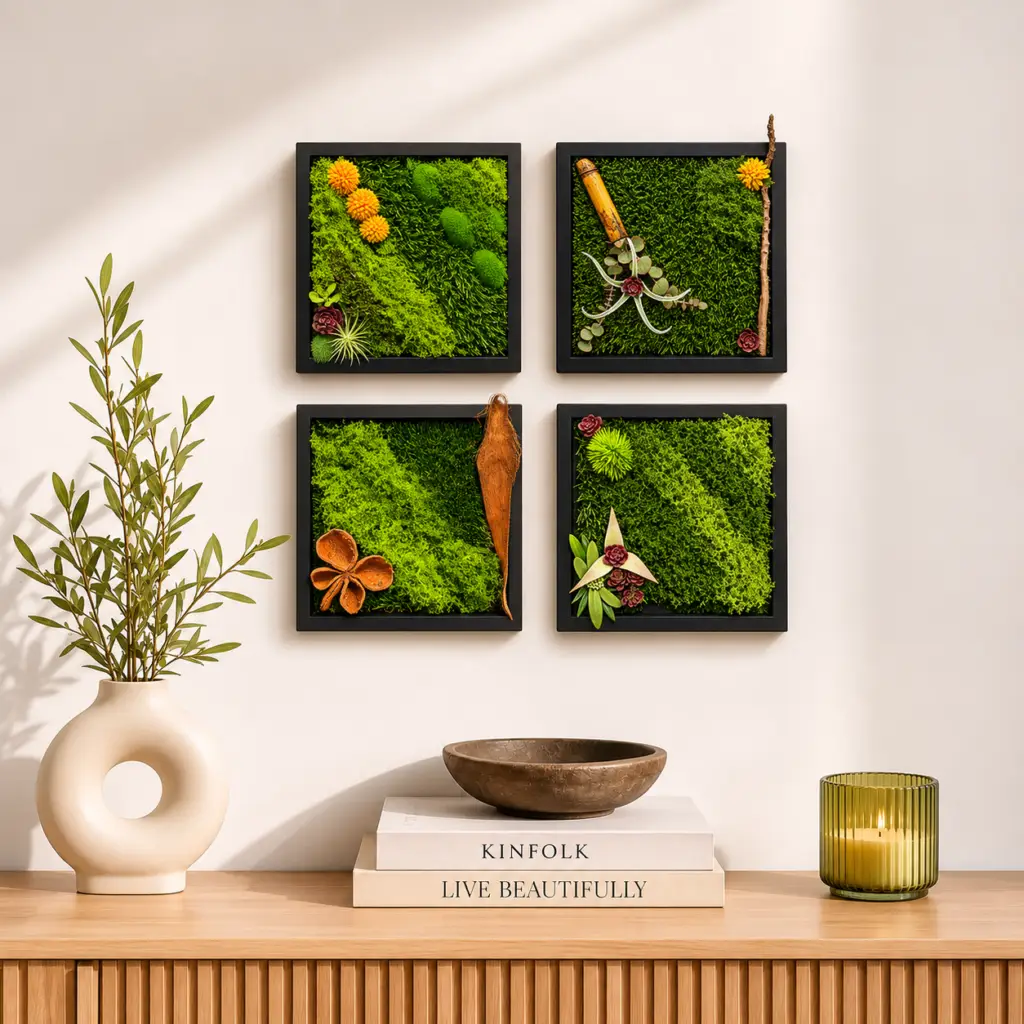
Preserved moss is often used in framed wall art, on tabletops under glass cloches, or as part of a larger terrarium display. It pairs well with other preserved botanicals such as ferns, lichen, or branches. Because it needs no watering or sunlight, it can go into spots that would be impossible for live plants: a dark hallway, a windowless bathroom, or a bookshelf in a corner that never gets natural light.
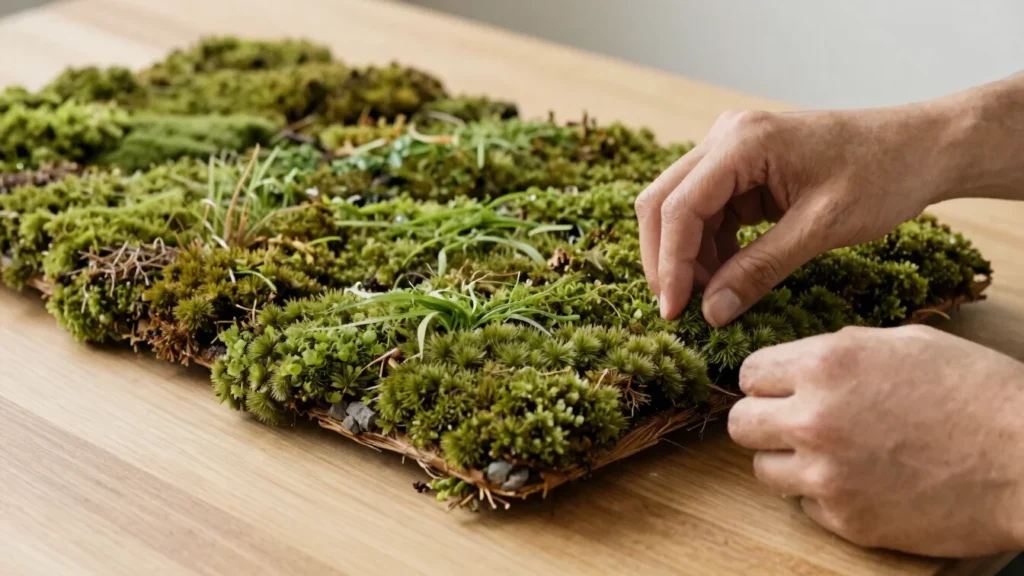
When arranging preserved moss in a display, keep in mind that it is quite light. It does not need a deep container or heavy soil. A shallow tray, a picture frame with a backing board, or a glass dome on a wooden base all work well. The moss can be attached with a low-temperature glue gun or a clear craft adhesive. For larger installations, a simple frame with a felt or mesh backing allows the moss to be fixed in place without covering the entire back surface.
One of the biggest advantages of preserved moss is that it stays green and soft without any daily effort. It will not drop leaves, attract insects, or require repotting. That makes it a popular choice for people who want greenery in their home but do not have the time or consistency for live plant care. In fact, many people describe preserved moss as easy care natural wall decor because it adds colour and texture with almost no maintenance.
For those who want the look of a green wall or a botanical display without the watering schedule, preserved moss is a practical alternative. It does not need trimming, fertiliser, or seasonal repotting. Once it is in place, the main tasks are dusting occasionally and keeping it out of harsh sunlight.
Common mistakes to avoid
Even though preserved moss is low maintenance, a few common errors can shorten its life. The most frequent one is exposing it to direct sunlight for long periods. As mentioned, UV light fades the colour. If you notice the moss turning yellow or pale in patches, check whether sunlight hits that spot during the day. Moving it to a shadier spot usually stops further fading.
Another mistake is putting preserved moss in a very humid room without any airflow. While the moss itself can handle humidity, stagnant wet air can lead to mould growth on the surface or on the frame. If the room feels damp, make sure there is some air movement - even a small fan on low or an open door helps. If you see mould, wipe it off gently with a damp cloth and let the area dry completely. Do not use bleach or harsh chemicals, as they can strip the colour from the moss.
Some people also try to clean preserved moss with water or a spray bottle. A light misting is fine, but do not soak the moss. If the backing board or frame gets wet, it could warp or grow mould. Stick to dry dusting for routine cleaning and save the misting for when the moss feels unusually dry.
Who is preserved moss best for?
Preserved moss suits anyone who enjoys the look of greenery but prefers a low-maintenance option. It works well in offices, rental apartments, or rooms with limited natural light. It is also a good choice for people who travel often and cannot water plants regularly. Because it does not require soil or drainage, it can be displayed in creative ways that live plants cannot, such as on a vertical wall or inside a glass frame.
For those who want to add a natural element to their decor without ongoing care, preserved moss is a solid choice. It offers the visual benefits of a live plant without the watering, sunlight, or feeding schedule. It is essentially easy care natural wall decor that stays looking good with minimal attention.
If you are considering a moss display, the most important thing is to understand what the moss needs and what it does not. It does not need water, sunlight, or soil. It does need indirect light, moderate humidity, occasional dusting, and reasonable airflow. Keep those conditions in mind and your preserved moss will stay fresh and green for years.